
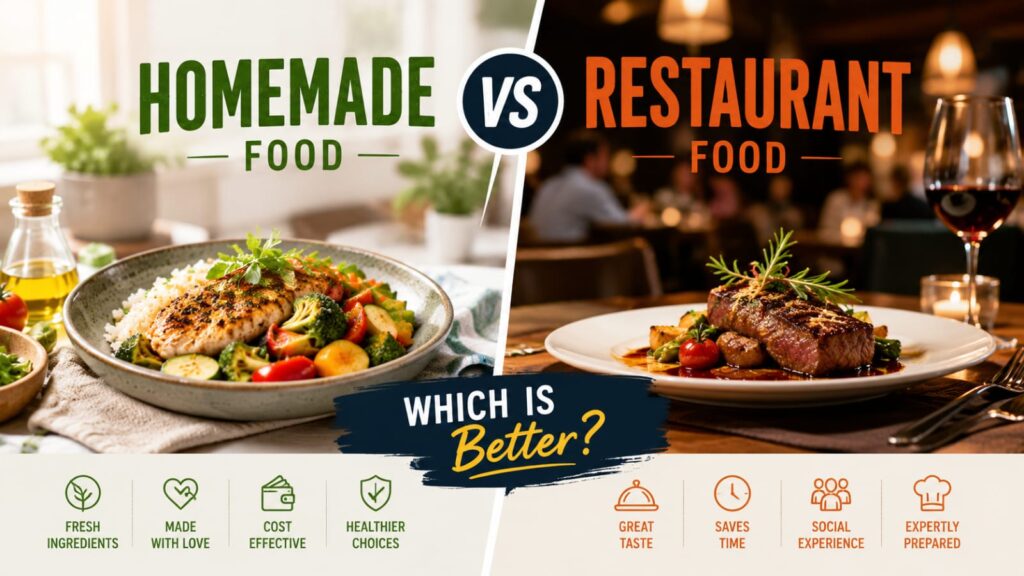
Food is more than just fuel for our bodies. It brings people together, creates memories, and allows us to experience different cultures and flavors. In today’s busy world, people often find themselves choosing between cooking meals at home and ordering food from restaurants.
While restaurant food offers convenience and excitement, homemade food continues to hold a special place in many households. But which one is truly better?
The answer isn’t as simple as choosing one over the other. Both homemade and restaurant food have their advantages and disadvantages. Understanding these differences can help you make smarter decisions for your health, budget, and lifestyle.
In this article, we’ll compare homemade food and restaurant food across several important factors, including nutrition, cost, taste, convenience, food safety, and overall value.
Why This Comparison Matters
Modern lifestyles have made restaurant food more accessible than ever before. Food delivery apps, takeout services, and restaurants on every corner make it easy to enjoy meals without cooking.
At the same time, many people are becoming more health-conscious and interested in preparing meals at home.
Questions like these are common:
- Is homemade food healthier?
- Is restaurant food worth the extra cost?
- Which option is better for families?
- Can homemade food taste as good as restaurant meals?
Let’s explore the answers.
Homemade Food: What Makes It Special?
Homemade food refers to meals prepared in your own kitchen using ingredients you choose and prepare yourself.
For generations, home-cooked meals have been the foundation of family life.
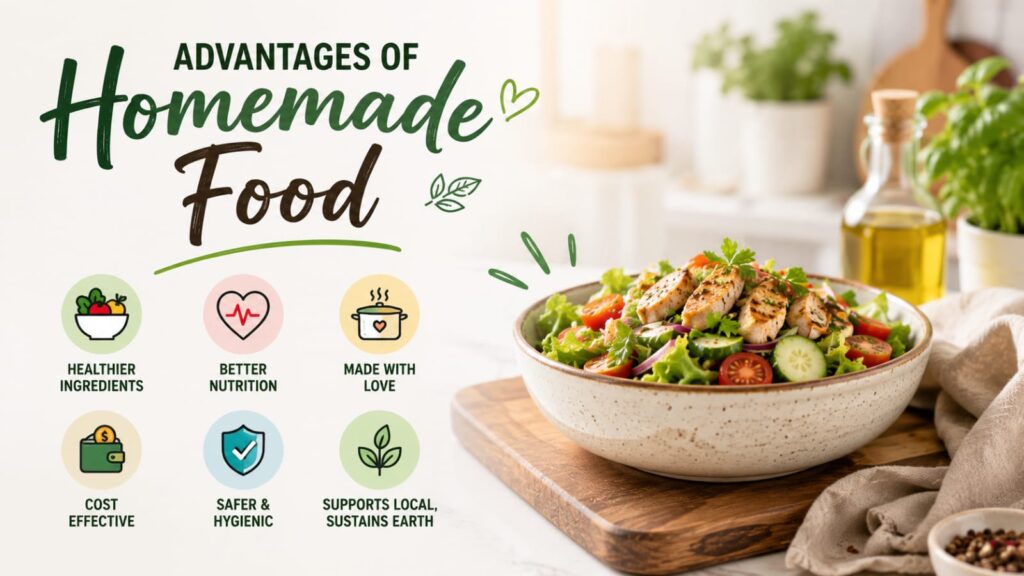
Advantages of Homemade Food
One of the biggest benefits of cooking at home is knowing exactly what goes into your food.
You decide:
- The quality of ingredients
- The amount of oil used
- The quantity of salt
- The level of spices
- Portion sizes
This level of control is difficult to achieve when eating out.
Healthier Choices
When cooking at home, you can focus on nutritious ingredients such as:
- Fresh vegetables
- Whole grains
- Lean proteins
- Healthy fats
You can also avoid excessive amounts of:
- Sugar
- Salt
- Artificial additives
- Preservatives
As a result, homemade meals are often healthier than restaurant alternatives.
Better Portion Control
Restaurants frequently serve large portions.
While this may seem like good value, it often leads to overeating.
At home, you can prepare portions that match your nutritional needs and reduce food waste.
Cost Savings
Cooking at home is usually far more affordable than dining out regularly.
For the cost of one restaurant meal, you can often prepare multiple servings at home.
Over time, the savings can be substantial.
Family Bonding
Preparing meals together can strengthen family relationships.
Cooking offers opportunities to:
- Teach children life skills
- Share traditions
- Spend quality time together
Many cherished family memories are created around homemade meals.
Challenges of Homemade Food
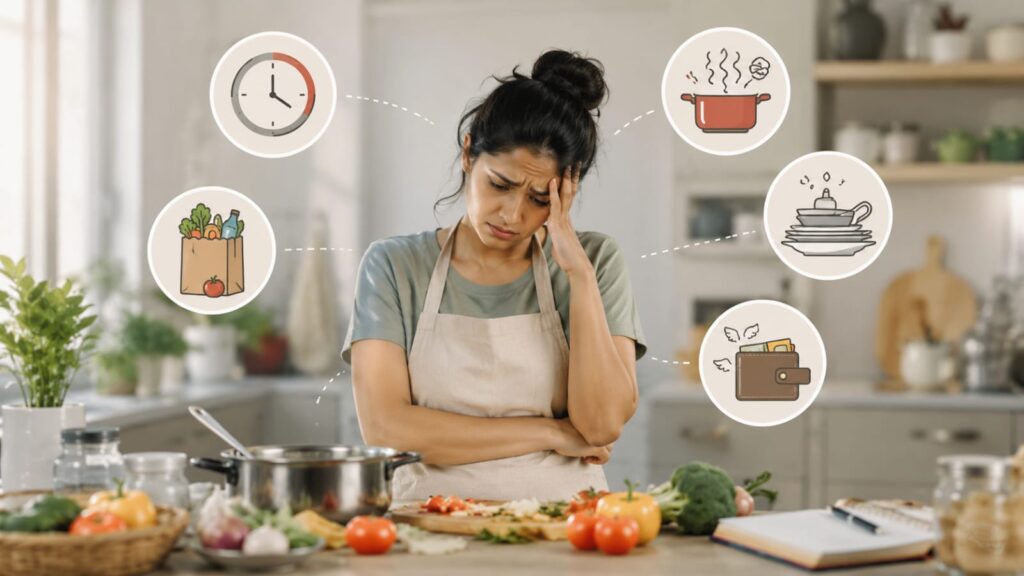
While home cooking has many benefits, it isn’t perfect.
Time and Effort Required
Cooking involves:
- Grocery shopping
- Meal planning
- Preparation
- Cooking
- Cleaning
Busy schedules can make these tasks challenging.
Learning Curve
Not everyone feels confident in the kitchen.
Beginners may struggle with:
- Cooking techniques
- Time management
- Following recipes
However, cooking skills improve with practice.
Limited Variety
Many people tend to cook familiar meals repeatedly.
Without experimentation, home cooking can sometimes become repetitive.
Restaurant Food: Why People Love It
Restaurant food is designed to provide convenience, variety, and enjoyment.
Whether it’s a casual café, family restaurant, or fine-dining establishment, restaurants offer experiences that home cooking cannot always replicate.
Advantages of Restaurant Food
Convenience
One of the biggest reasons people choose restaurants is convenience.
You don’t need to:
- Shop for ingredients
- Prepare food
- Cook
- Clean dishes
For busy individuals, this can be extremely appealing.
Wide Variety
Restaurants allow you to explore cuisines from around the world.
You can enjoy:
- Italian pasta
- Chinese stir-fries
- Mexican tacos
- Indian curries
- Japanese sushi
All without learning how to prepare them yourself.
Professional Expertise
Professional chefs spend years mastering cooking techniques.
Their expertise often results in:
- Unique flavors
- Attractive presentation
- Creative dishes
This can make dining out a memorable experience.
Social Experience
Restaurants provide a setting for:
- Family gatherings
- Celebrations
- Business meetings
- Date nights
The atmosphere can enhance the enjoyment of a meal.

Challenges of Restaurant Food
Despite its benefits, restaurant food also has several drawbacks.
Higher Cost
Restaurant meals generally cost much more than homemade alternatives.
The price includes:
- Ingredients
- Labor
- Rent
- Utilities
- Service
Regular dining out can significantly increase monthly expenses.
Less Control Over Ingredients
When eating at a restaurant, you usually don’t know:
- How much oil is used
- How much salt is added
- The freshness of ingredients
- The exact cooking methods
This makes it harder to manage dietary goals.
Larger Portions
Many restaurants serve portions that exceed recommended serving sizes.
This can contribute to:
- Excess calorie intake
- Weight gain
- Food waste
Hidden Ingredients
Restaurant meals often contain more:
- Butter
- Cream
- Sugar
- Salt
- Oil
These ingredients enhance flavor but may reduce nutritional value.
Homemade Food vs Restaurant Food: A Direct Comparison
Health
Winner: Homemade Food
You control ingredients, cooking methods, and portion sizes.
Cost
Winner: Homemade Food
Cooking at home is usually much more economical.
Convenience
Winner: Restaurant Food
Restaurants save time and effort.
Variety
Winner: Restaurant Food
Restaurants offer endless options and cuisines.
Portion Control
Winner: Homemade Food
You decide how much to prepare and eat.
Special Occasions
Winner: Restaurant Food
Dining out often creates memorable experiences.
Long-Term Lifestyle Benefits
Winner: Homemade Food
Regular home cooking supports healthier eating habits and financial savings
Which Option Is Better for Families?
For most families, homemade food is generally the better everyday choice.
Benefits include:
- Better nutrition
- Lower costs
- Greater ingredient control
- Family bonding opportunities
However, restaurant visits can still be enjoyable for celebrations and occasional treats.
The key is balance.
Can Homemade Food Taste as Good as Restaurant Food?
Absolutely.
Many people assume restaurant food always tastes better, but this isn’t necessarily true.
The secret is understanding a few basics:
- Use fresh ingredients.
- Season food properly.
- Learn simple cooking techniques.
- Practice regularly.
- Experiment with herbs and spices.
As cooking skills improve, homemade meals often become just as satisfying—and sometimes even better—than restaurant dishes.
Tips for Making Homemade Food More Exciting
If you want to enjoy home cooking more often, try these ideas:
Explore New Recipes
Try one new recipe every week.
Cook Different Cuisines
Experiment with:
- Italian dishes
- Asian recipes
- Mediterranean meals
- Mexican favorites
Use Fresh Herbs and Spices
Small flavor upgrades can make a big difference.
Involve Family Members
Cooking together makes meal preparation more enjoyable.
Create Restaurant-Style Presentations
Simple plating techniques can make homemade meals feel special.
Finding the Right Balance
The debate doesn’t have to be all-or-nothing.
A balanced approach often works best.
For example:
- Cook at home most days.
- Reserve restaurant meals for special occasions.
- Learn to recreate favorite restaurant dishes at home.
- Focus on nutrition without eliminating enjoyment.
This approach allows you to enjoy the benefits of both options.
Final Thoughts
When comparing homemade food and restaurant food, homemade meals come out ahead in many important areas, including health, cost, nutrition, and ingredient control. Cooking at home allows you to make informed choices about what you eat while also saving money and developing valuable life skills.
That doesn’t mean restaurant food is bad. Restaurants provide convenience, variety, and enjoyable experiences that can be difficult to replicate at home. They are perfect for celebrations, social gatherings, and occasional treats.
Ultimately, the best choice isn’t necessarily homemade food or restaurant food—it’s finding a healthy balance between the two. By making home-cooked meals the foundation of your eating habits and enjoying restaurant meals in moderation, you can enjoy the best of both worlds.
Remember, every delicious homemade meal is an investment in your health, your skills, and your future. And that’s something worth celebrating.